

Common Questions About Anaemia & Life Insurance
1. Can you get life insurance if you have anaemia?
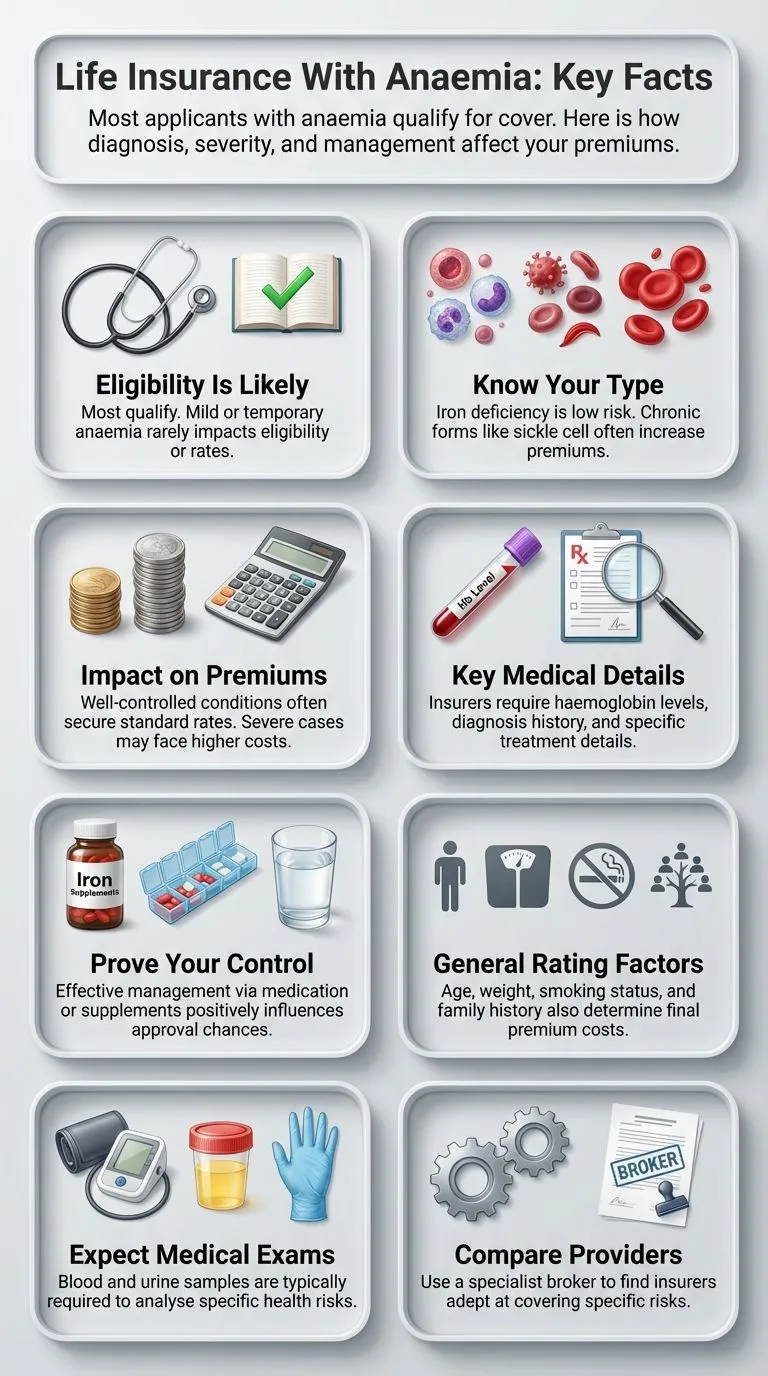
Yes. Most people with anaemia can qualify for life insurance. Approval depends on the type of anaemia, its severity, underlying cause, and how well it is managed. Mild or temporary anaemia usually has little impact on eligibility.
2. Does the type of anaemia matter for life insurance approval?
Yes. Iron-deficiency anaemia is generally viewed as low risk, especially if treated. Chronic or inherited forms, such as sickle cell anaemia or aplastic anaemia, may result in higher premiums or additional underwriting review due to associated health risks.
3. Will anaemia increase my life insurance premiums?
It can, but not always. Mild, well-controlled anaemia often qualifies for standard rates. More severe cases, frequent hospitalisations, or anaemia linked to serious conditions may lead to higher premiums or policy limitations.
4. What information do insurers ask about anaemia?
Insurers typically ask about recent blood test results (such as haemoglobin levels), diagnosis history, treatment (iron supplements, transfusions, or medication), symptoms, and whether the anaemia is stable or worsening.
Discover Providers Sympathetic To Anaemia – Quick Quote Form
There are many factors to consider when applying for life insurance. The insurance company wants to determine what risks it takes when it approves an applicant’s coverage.
Therefore, the company needs to understand each applicant’s age and state of health. This usually includes an individual’s family health history.
Even though serious health concerns may prevent an individual from completely qualifying for coverage, plenty of others would consider an applicant eligible for coverage.
However, there are cases where it would mean individuals would have to pay more in monthly premiums to compensate for the added risk the insurance company is taking on; this is sometimes the case when individuals with anaemia apply for life insurance.
What Underwriters Need to Know
When individuals with anaemia apply for life insurance, the underwriters want more details about their condition.
That way, they can better understand the severity of their case and how well they may be managing it through medication and other means.
Some of the questions the insurance underwriters will likely ask you include the following:
- When were you initially diagnosed?
- What is the root cause of your condition?
- What symptoms have you suffered in the past six months due to your condition?
- Have you ever needed to be hospitalised due to your case of anaemia?
- What are the results of your most recent blood tests?
- Do you take any iron supplements or other medications for your anaemia?
It is important to provide as much information as you can when answering these questions.
This will give underwriters a clearer picture of your overall condition and a baseline for pricing your insurance coverage.
Click To Compare QuotesIf you are able to control your condition through medication or some other means, you should note this on the application or on a separate piece of paper.
This shows the underwriters that you are keeping your case of anaemia in check, and it can be a positive factor in getting your application approved.
How Much Premium Will You Pay for Life Insurance with Anaemia?
Individuals with anaemia who have life insurance have premiums based primarily on how severe their condition is.
For example, suppose your iron level is under control, and your anaemia is not caused by another more serious health issue.
In that case, you can gain a Standard (or average) premium rate for your policy.
However, if your condition is more severe, your policy will likely be rated as Substandard, and your premium will likely be higher than that of the average policyholder due to the extra risk the insurance company is taking on with your case.
The life insurance company will also use other factors for its decision when determining your premium rate, including the following:
- Age
- Gender
- Height and weight
- Smoking and tobacco use
- Alcohol consumption
- Occupation and income (if applicable)
- Hobbies
- Overall health history
- Family health history
You will likely be required to take a medical exam as part of the insurance company’s application process.
This includes submitting blood and urine samples, which will be analysed for specific health conditions that also present a risk to the insurance company.
Once your information has been submitted, the insurance underwriters can make a more informed decision about your coverage.
Taking the Next Step Towards Applying for Cover
If you have been diagnosed with anaemia and plan to apply for life insurance, it would help to work with a company that has access to other insurance companies.
This would increase your chances of obtaining coverage approval.
In that regard, we can help because we specialise in all types of high-risk life insurance, with a particular emphasis on individuals with illnesses and disabilities.
We work with many of the industry’s top-rated life insurance companies, and we can help you determine which carriers are more adept at covering certain kinds of risk.
Before beginning, it always helps to compare coverage options and premium quotes.
To do so, fill out the form on this page to start the process. Within moments, you will see your life insurance options and possible premium rates.
We understand that applying for life insurance when you have anaemia can raise many questions, so we are here to assist.
Please feel free to contact us at 0203-150-1349 with any questions or concerns, and we will be happy to help.